
The First Instinct Is Usually the Wrong One
When a garage door slips off its track, almost everyone does the same thing first: they hit the opener button again, hoping the door will just reset itself and slide back into place. It's an understandable reflex. The door is half-open, it's blocking your driveway or exposing your garage to the weather, and the remote is right there in your hand. But a door that's off track isn't stuck — it's unsupported. Hitting the opener again asks the motor to pull a door that's no longer riding in its guides, and that's how a bent track turns into a torn-off bracket, a cracked panel, or a door that comes down crooked and jams halfway.
The second most common mistake is just as tempting: grabbing the door by hand and trying to muscle it back onto the track. If the door is heavy — and most are, especially insulated steel doors common in South Florida homes built for wind resistance — you're now working against spring tension you can't see and can't predict. That's where people get hurt.
What Actually Goes Wrong When a Door Jumps the Track
A few things typically cause this. A roller wears out or snaps and lets that corner of the door drop. A cable frays or slips off its drum, usually from age or from one side of the door carrying more weight than the other. The track itself gets bent, often from someone backing into it or from a door being forced while already misaligned. In Weston and the surrounding area, humidity and salt air take a toll too — tracks and rollers that sit exposed to moisture corrode faster, and rust buildup makes rollers bind, jump, or shear off entirely after years of swelling and contracting in the heat.
During hurricane season, wind-load stress adds another failure point. Doors built to meet wind-load requirements are engineered to flex and resist pressure, but repeated gusts during a storm can rack the door slightly out of square. If a track was already a little loose or a roller was already worn, that's often the moment it finally gives way.
The danger isn't just cosmetic. A garage door is one of the heaviest moving objects in a home, and it's held up by torsion or extension springs under serious tension, plus cables that are also under load. When a door comes off track, that tension doesn't disappear — it's just no longer being controlled the way it's supposed to be. A cable that lets go unexpectedly can snap back hard. A door that's partially off its track and then drops the rest of the way can crush fingers, feet, or whatever's underneath it.
What to Do Right Now
- Stop using the opener. Don't press the remote or the wall button again. If the door is mid-cycle, let it be.
- Disconnect the opener from the door if you can do so safely. Most openers have a red emergency release cord hanging from the trolley rail — pulling it disconnects the carriage from the door so the motor can't keep pulling on a misaligned door.
- Keep people, kids, and pets away from the door and the garage entrance. Treat the area like it's unstable, because it is.
- Look, but don't touch, the springs and cables. If you can see a cable hanging loose or a spring that looks stretched or snapped, note it, but don't attempt to adjust, tighten, or remove anything.
- Check whether the door is blocking a vehicle or a safety exit and plan around it rather than forcing the door to move.
- If a storm is approaching and the door is stuck open, don't try to pull it closed manually using the rope or by hand. A door hanging unevenly on its track can come down fast and at an angle.
What Not to Touch
The springs, cables, and drums are not homeowner territory, even for a quick temporary fix. Torsion springs especially store a huge amount of energy, and releasing that tension incorrectly has sent plenty of people to urgent care. Don't try to re-thread a cable back onto its drum, don't try to bend a track back into shape with a pry bar, and don't try to lift and reseat rollers into the track channel while the door is under any kind of tension. If a panel is bent or a hinge has pulled loose, leave it as-is rather than trying to straighten it; forcing a bent panel back into place often cracks it further.
A Note for Storm Season
If the door came off track during or right after a storm, don't assume it's purely a wind issue and leave it until the weather clears. A door that's off track is also no longer providing the wind resistance it's rated for, which matters if more weather is on the way. Secure the area, keep the opener disconnected, and get it looked at before the next system rolls through.
When to Call Weston Garage Door Service
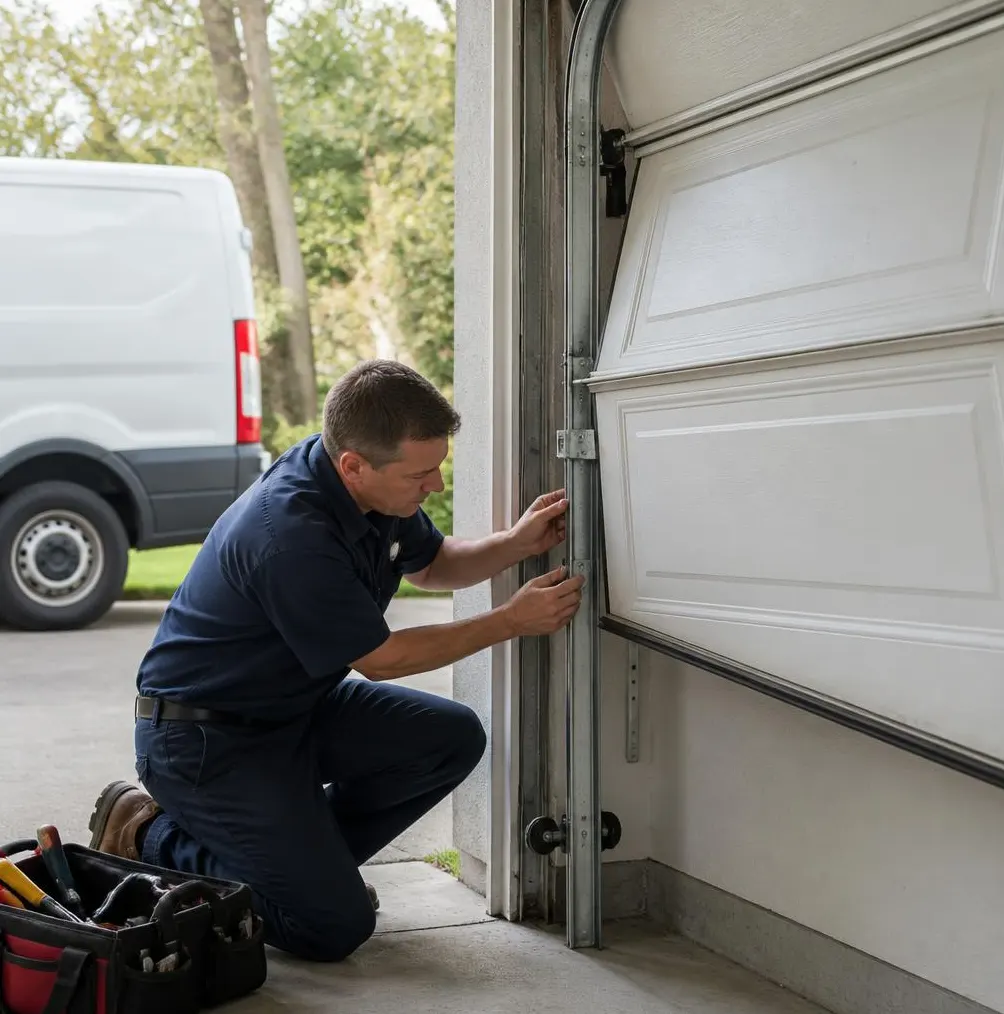
This is exactly the kind of job that needs a technician on-site rather than a guess-and-check approach. Weston Garage Door Service handles Off Track Door Repair as a priority call because of the safety risk involved, and if the cause turns out to be a worn or snapped spring, they'll handle Garage Door Spring Repair at the same visit rather than sending you somewhere else. A technician will check the rollers, tracks, cables, and spring tension together, since fixing one without checking the others often means the same failure happens again in a few months — especially with the rust and swelling that humidity and salt air cause on components here.
If your garage door has come off its track anywhere in Weston, Pembroke Pines, Davie, Southwest Ranches, Miramar, Cooper City, Plantation, or Sunrise, don't try to push it back into place yourself. Call Weston Garage Door Service and let a technician get it moving safely again.