
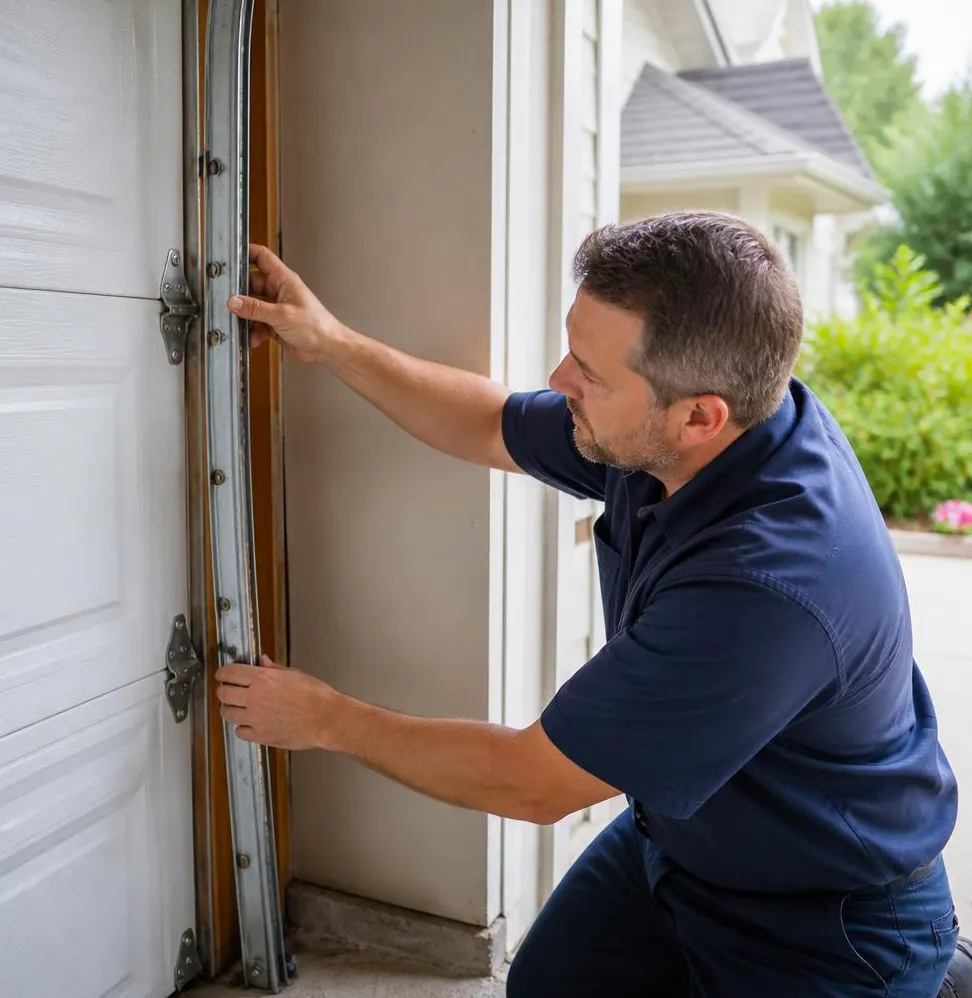
Kids, Pets, and Garage Doors: What Weston Techs See Go Wrong
A typical call starts the same way: a parent noticed the garage door didn't reverse when it should have, or the dog got spooked and bolted under a closing door, or a toddler figured out how to press the wall button. By the time we get there, the family is usually fine and just shaken up. But the door itself tells a different story — a safety sensor knocked out of alignment, a worn cable that let the door drop faster than it should, or an auto-reverse feature that's been quietly failing for months without anyone testing it.
Where the Risk Actually Comes From
A standard garage door panel weighs somewhere in the 150–400 lb range depending on size and material. That weight doesn't matter when everything works correctly — the opener's force settings and the photo-eye sensors are designed to stop and reverse the door the instant something crosses its path. The danger shows up when one of those safety systems is out of spec, which happens more often than most homeowners realize:
- Misaligned or dirty photo-eye sensors. The two small sensors near the bottom of the tracks have to be aimed at each other within a fraction of an inch. Humidity fogging, pollen, pollen-and-dust buildup, or a bump from a bike or a cooler can throw them off just enough that a small child or a pet under 24 inches tall passes underneath without being detected.
- Worn auto-reverse mechanisms. This is the feature that's supposed to stop the door if it meets resistance. Openers installed before the mid-1990s may not have it at all, and even newer units can have the force setting cranked too high after a DIY adjustment, meaning the door pushes through resistance instead of stopping.
- Easy access to controls. Wall buttons mounted low enough for a child to reach, garage remotes left in an unlocked car, or an opener app left logged in on a shared tablet all give kids the ability to trigger a door without an adult present.
- Frayed or rusting cables and springs. Salt air near the coast and constant humidity accelerate corrosion on exposed hardware. A cable that's already fraying can snap under tension, and a door coming down on a frayed cable moves unpredictably — not a controlled, sensor-monitored descent.
- Pets treating the garage as a shortcut. Dogs and cats learn the rhythm of a garage door fast, and during afternoon downpour season, pets often dash in or out right as the door is cycling, which is exactly when timing matters most.
How Bad It Actually Gets
Most incidents are minor — a startled pet, a pinched finger, a door that stops just short of contact. But when a safety system has failed silently, the outcomes are serious: crush injuries, broken bones, or worse, especially with small children and small pets who don't have the body weight to trigger a pressure-based reverse setting that's been adjusted too loose. The injuries that do happen tend to come from two compounding failures at once — a sensor that wasn't detecting anything, combined with a force setting that let the door keep moving.
What Actually Prevents It
- Test the auto-reverse every month. Place a roll of paper towels or a 2x4 flat on the ground where the door closes. If the door doesn't reverse on contact, stop using the opener until it's serviced.
- Check the photo-eye sensors for alignment and buildup. Wipe the lenses, confirm both indicator lights are solid (not blinking), and make sure nothing — storage bins, a bike, a cooler — has nudged the brackets out of position.
- Mount wall controls at least 5 feet up and keep remotes off low shelves or unlocked vehicles. If your opener has an app, use a passcode-protected device, not a shared tablet.
- Teach kids the emergency release cord is not a toy but that pulling it disconnects the opener if someone or something is ever caught — know how to use it yourself first.
- Inspect cables and springs for rust or fraying at least twice a year, more often if your home is closer to the coast. Replace at the first sign of wear rather than waiting for a failure.
- Don't let the garage become a play or pet zone during cycling. A door closing during a sudden afternoon storm, with a pet rushing for cover, is one of the most common scenarios we see.
- Keep the opener's battery backup functional so a power blip during storm season doesn't tempt anyone to manually force the door open or closed.
When to Call Weston Garage Door Service
If your auto-reverse test fails, your sensors won't stay aligned, or you notice rust on cables and springs, don't wait for the worst-case scenario. Our Garage Door Tune-Up & Maintenance service checks every safety component — sensors, force settings, cables, and hardware — and corrects the small issues before they become dangerous ones. If a cable has already frayed or snapped, our Garage Door Cable Repair gets it back to safe, code-appropriate tension the same day.
If you're in Weston, Pembroke Pines, Davie, Southwest Ranches, Miramar, Cooper City, Plantation, or Sunrise and want a safety check before the holidays bring more foot traffic through the garage, call Weston Garage Door Service today.